Thứ Năm, 07/11/2024, 09:00 (GMT+7)
Descriptions of the Mongol invasions survive in documents of both Japan and the Yuan dynasty. According to the History of Yuan (Ch. Yuan shi), having destroyed the Southern Song dynasty and unifying China in 1279, the Mongols drew up two forces in 1281, the eastern Donglu and the southern Jiangnan armies, planning the conquest of Japan. The eastern Donglu force sailed from Happo in Goryeo (now Masan in South Gyeongsang province, South Korea) on May 22, passing through Tsushima and Ikki islands and attacking Hakata, but retreated to Ikki after meeting fierce resistance from the Japanese. Meanwhile, the southern Jiangnan force sailed sometime around the beginning of July from Qingyuan (modern Ningbo, Zhejiang province, People’s Republic of China), at the mouth of the Yangtze river, headed for the island of Hirado.
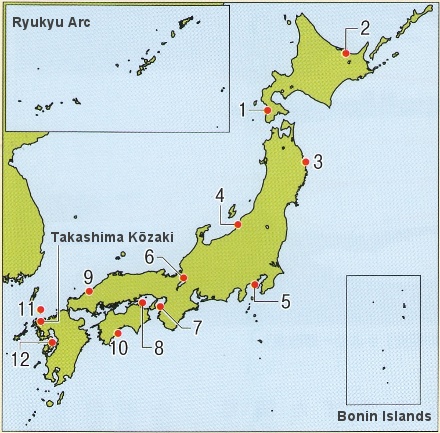
There has been so far a large amount of artifacts found at the southern coast of Takashima Island; however, these all artifacts do not belong to those of the remains of Mongol invasion. Looking into the artifacts relating to Mongol invasion, the number of unearthed Korean artifacts is quite little as comparing with Chinese artifacts. Most of Chinese ceramics of Middle Age unearthed at the Takashima underwater site mainly belong to several types of brown grazed vases, and this tendency is quite different from the diversity of Chinese ceramics as consumer goods unearthed at the other sites of Middle Age. The quality of Chinese ceramics unearthed at the site are not good enough; this implies that those vases were produced in a hurry. It must be an indirect evidence to show an unusual situation of war.


An anchor pulled up from the bottom This wooden anchor recovered in the 1994 investigation had an anchor stone attached to each side.
There have been seventy four objects which were unearthed in the 1994 field season (October 14 through December 12) : three wooden anchors, seventeen stone anchor stocks, of which is l30cm long for a large size (two pieces) , 70cm long for a medium size (four pieces) , and 50cm for a small size (eleven pieces) , wooden objects (fifty pieces) , rope like objects (two pieces) , and stone objects (two pieces).